Where the One-Horned Giant Rules the Grasslands
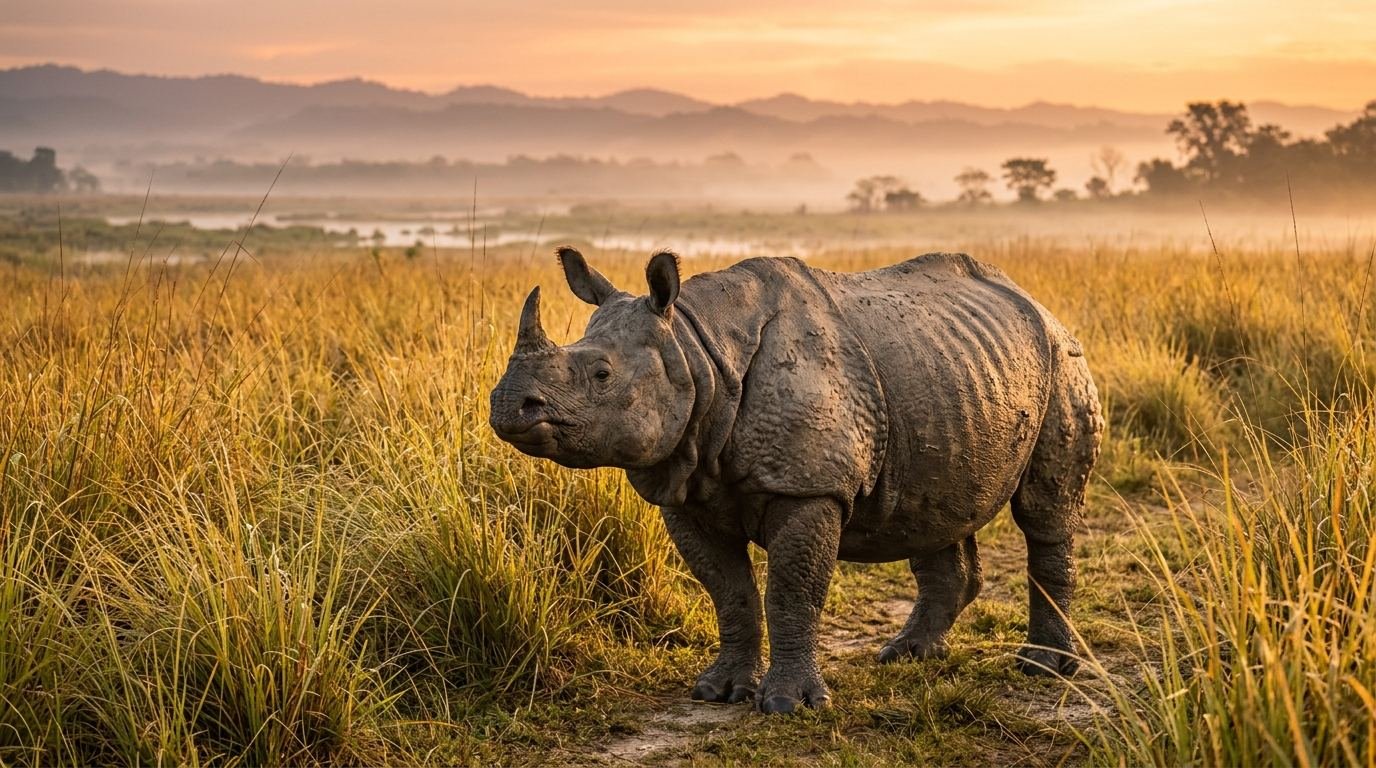
There are few wildlife encounters as powerful as seeing a greater one-horned rhinoceros standing silently in the tall grass of Kaziranga.
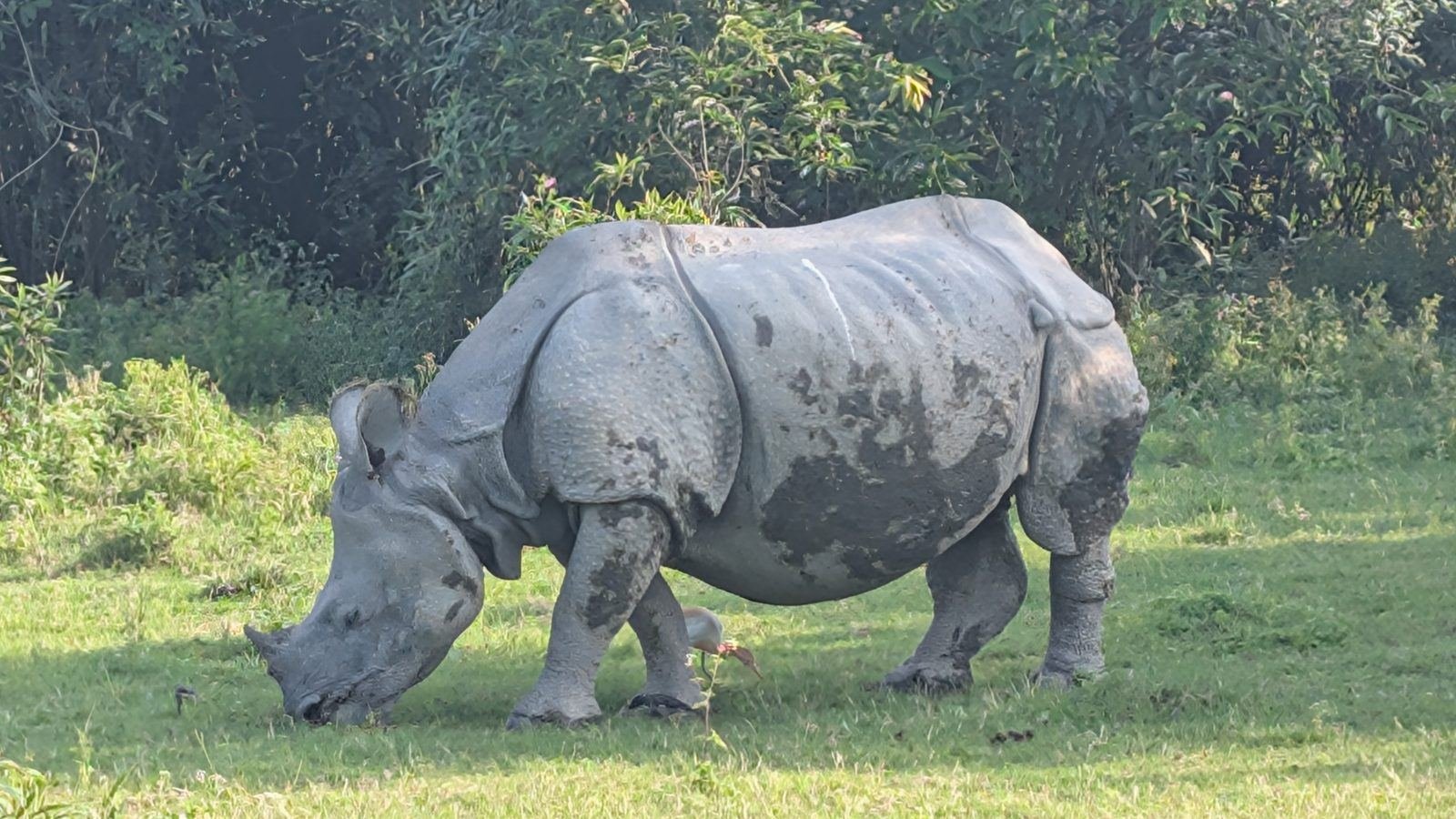
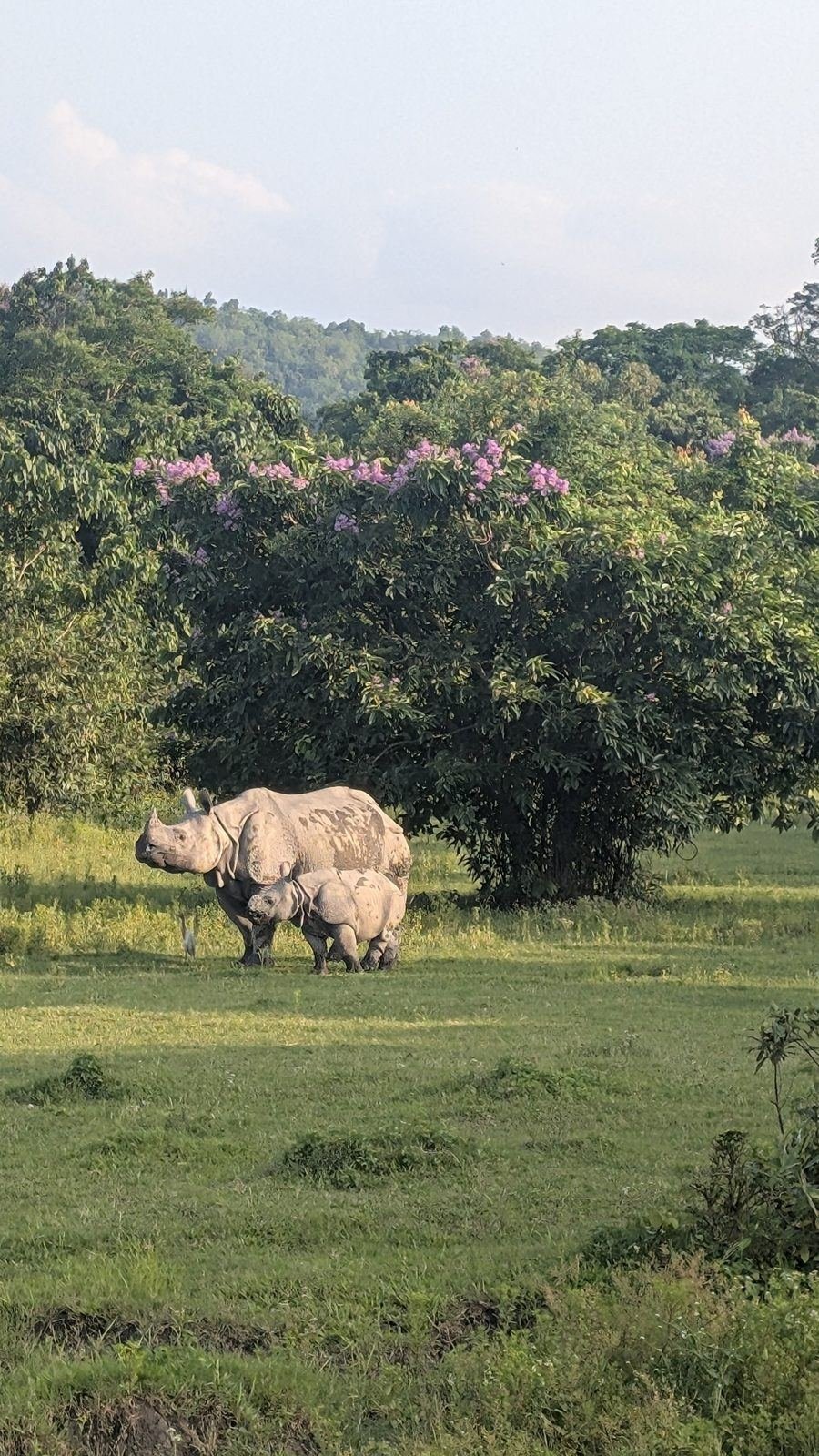
Massive, ancient and unmistakable, the Indian one-horned rhinoceros is the true icon of Kaziranga National Park, Assam — a UNESCO World Heritage Site and one of the world's most important strongholds for this remarkable species.
Spread across the floodplains of the mighty Brahmaputra, Kaziranga offers an extraordinary landscape of tall elephant grass, wetlands, shallow pools, forests and riverine habitats.
This unique ecosystem provides ideal conditions for the greater one-horned rhinoceros and has helped Kaziranga become home to the largest population of this species anywhere in the world.
The Assam Forest Department's published wildlife data records 2,413 rhinos in Kaziranga in 2018, while the Government of India reported 2,613 in the 2022 census.
Known scientifically as Rhinoceros unicornis, this magnificent animal is one of the largest land mammals of Asia.
Its thick, armour-like skin, single horn and enormous presence make it instantly recognisable.
But behind this powerful appearance is a fascinating animal that plays an important role in the grassland ecosystem. As a large herbivore, the rhino helps shape its habitat through grazing and movement across the grasslands.
Adults can weigh up to around 2,800 kg, and the species can live for several decades. Their diet consists mainly of grasses, along with leaves, fruits and aquatic vegetation.
Imagine entering the grasslands just after sunrise.
The morning mist slowly lifts from the wetlands. Tall elephant grass moves gently in the breeze. Birds call from the forest edge.
And then, through the golden grass, a huge silhouette appears.
A rhinoceros.
For a few moments, everything becomes quiet.
This is the magic of a Kaziranga wildlife safari — not knowing what you will encounter around the next bend.
While the rhinoceros is Kaziranga's most famous resident, the park is home to an extraordinary range of wildlife.
A safari may also bring encounters with:
The story of the Kaziranga rhino is also a story of conservation.
Kaziranga was originally established in the early 20th century specifically to protect the greater one-horned rhinoceros, whose numbers were once dangerously low. Over generations, dedicated conservation efforts, habitat protection, anti-poaching measures and scientific wildlife management have helped the population recover dramatically.
Today, Assam holds a very significant share of the world's greater one-horned rhino population, making the state one of the most important places on Earth for the species' future.
At SIMBO SOLARIS TRAVELS, we believe a wildlife holiday should be about more than ticking animals off a list.
It should be about experiencing the landscape, understanding the wilderness and creating moments that stay with you.
Explore Kaziranga's grasslands.
Follow the tracks of the wild.
Listen to the sounds of the forest.
Experience the unforgettable sight of the one-horned rhino in its natural habitat.
Kaziranga is not simply a place where you see a rhinoceros.
It is a place where you enter the world of the rhinoceros.
Your Assam wildlife adventure begins in the land where the one-horned rhinoceros has found one of its greatest strongholds on Earth.